The phrase “custom bowling shirt” covers a startling range of garments, from a moisture-wicking league jersey built for weekly competition to a heavy woven camp-collar shirt made to look like it walked out of 1957. Buying well starts with being honest about which group you are actually outfitting, because the fabric, fit, collar, and decoration method that delight one audience will disappoint another. This guide walks through the main use cases, what each one really needs, and where the money is well spent. If you land in more than one bucket, read both, because the compromises are where orders go sideways.
Competitive league teams
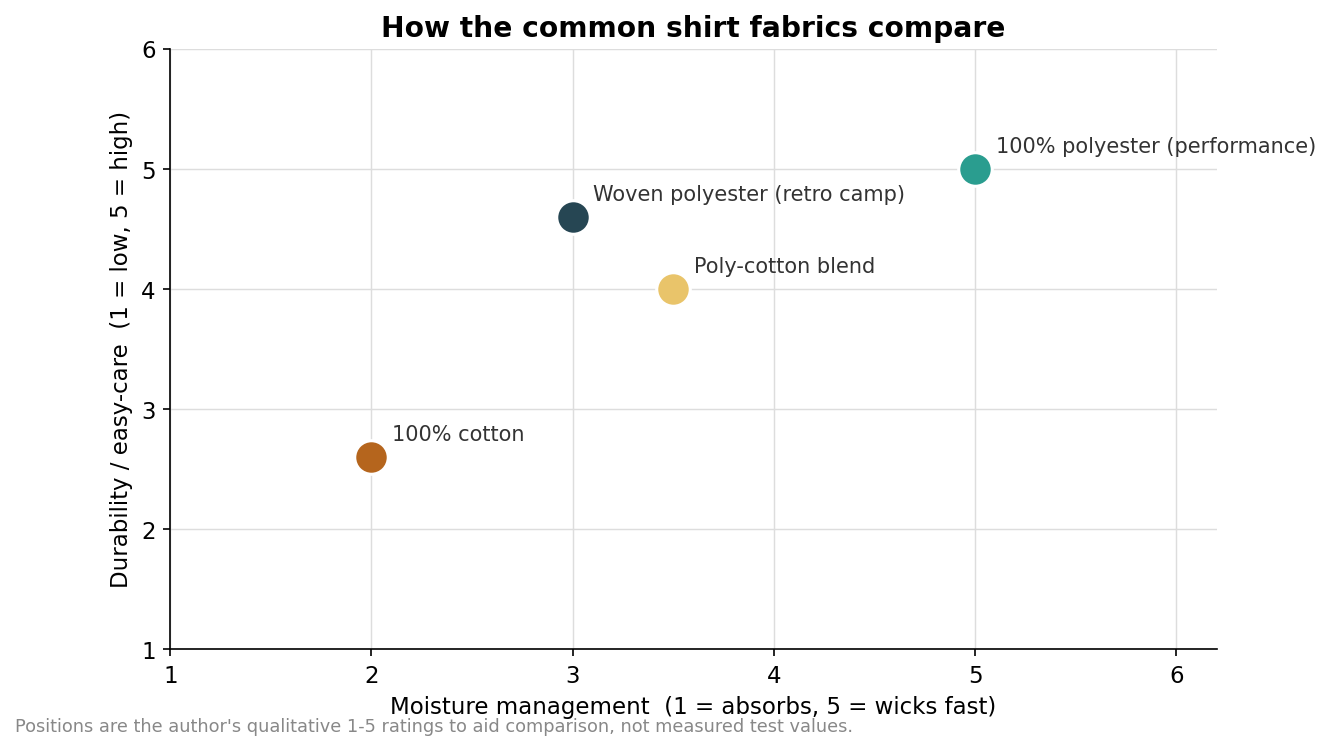
League play is an athletic use case, so treat the shirt like sportswear. A bowler makes dozens of repeated approaches and arm swings across a session, and cotton that soaks up sweat and clings is the enemy of a clean release. A 100% polyester performance fabric wicks moisture, dries quickly, and resists the shrinking and fading that show up after a season of washing. It also pairs perfectly with dye sublimation, which prints the design into the fibers so full-color team graphics, sponsor logos, and player names stay bold and never crack or peel. Fit should be athletic but not tight through the shoulders, and you should plan to reorder against a stored design file, because dye lots and fabric batches drift over time. The chart below maps how the fabrics compare on the two axes that matter most to a league: moisture management and durability.
Personalization is the norm here, not a luxury. Individual names and numbers mean each shirt is effectively a short run of one, which is easy with sublimation and digital methods and expensive with traditional screen printing. Order a full size range including women’s cuts if your league is mixed, and add a spare shirt or two in the common sizes, because a mid-season replacement that has to match the originals is the hardest order to get right.
Corporate and company bowling nights
A company night out is a branding exercise with a soft budget and a hard deadline. The shirt needs to look sharp in photos, carry the company logo tastefully, and fit a workforce that spans every body type. A mid-weight poly-cotton blend is the versatile choice: it manages moisture better than cotton, feels softer than pure performance fabric, and photographs well. For a subtle, professional look, an embroidered chest logo reads as more premium than a large printed graphic, though embroidery adds cost per unit and is best kept to a modest stitch count. Because these are usually one-time orders, prioritize a broad, forgiving size range and a comfortable relaxed fit over athletic performance, and confirm the turnaround early, since corporate events live and die by a fixed date.
Retro and vintage style
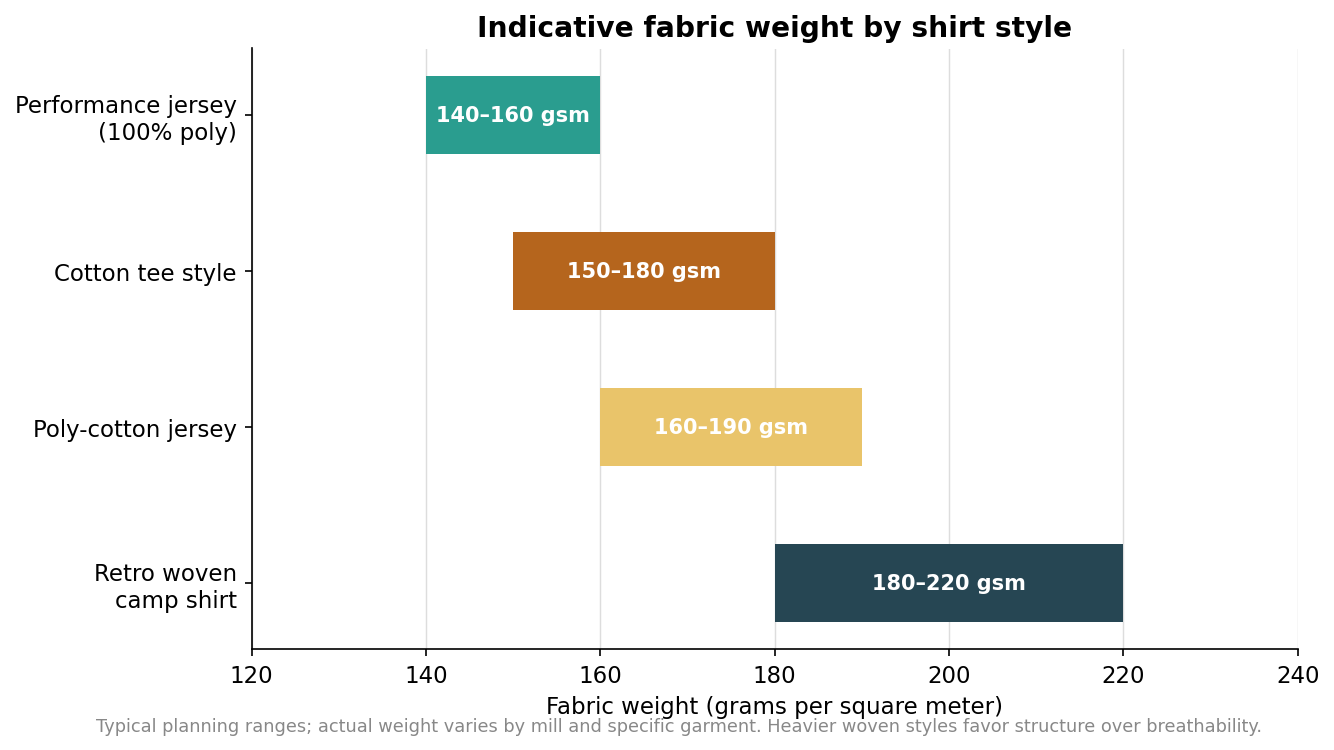
The rockabilly and vintage crowd is buying a look, and the fabric choice flips. Here a heavier woven polyester or poly-blend camp-collar shirt is the point: the structure holds the classic silhouette, the contrast panels and piping sit crisply, and chain-stitch embroidery on the back or chest delivers that mid-century feel. This is the one use case where breathability and wicking take a back seat to drape and structure, which is why these garments sit at the heavier end of the weight range. The chart below shows how a retro woven shirt compares in weight to the lighter jersey styles.
Decoration should match the era, not fight it. Embroidered lettering, felt-look appliqué, and contrast collars and plackets carry the vintage story better than a photographic print. Keep the color palette to the classic two- and three-tone combinations, and remember that heavier woven fabric behaves differently under embroidery than a stretchy jersey, so a proof stitch-out is worth the wait before committing to a group order.
Staff uniforms and one-off event groups
Two very different jobs share a practical answer. For alley staff, bar teams, and other uniforms that get washed constantly, durability and easy care win: a poly-cotton blend with an embroidered name holds color through repeated hot washes and looks tidy shift after shift. For bachelor parties, charity fundraisers, and other one-off groups, the priority is cost and speed rather than longevity, so a screen-printed cotton or poly-cotton shirt in a wide size range is usually the smart call, since the shirt only has to survive one memorable night. Screen printing rewards these orders when the design is one or two colors and the quantity is high enough to absorb the setup cost.
Across both, sizing is where group orders stumble, so collect real measurements or offer a sizing sample set rather than guessing, and build in a few spare shirts in the middle sizes. The one rule that spans every use case here is to order and approve a physical sample before the full run, because a shirt you have washed once and held in your hand tells you more than any spec sheet.
Choosing across the buckets
If your group straddles two of these cases, let the most demanding requirement lead. A league team that also wants a retro look should start from performance fabric and add vintage styling it can support, rather than starting from a heavy woven shirt that will not breathe through a match. A corporate group that wants both polish and low cost should weigh a single embroidered logo on a blended shirt against a printed design on a cheaper base, and pick based on how long the shirts need to last. The fabric weights and ratings in this guide are indicative planning figures that vary by garment and mill, so use them to narrow the field, then let a sample and a wash test make the final call.